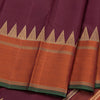
The Silk Heritage of Andhra Pradesh : Types & Traditions

Andhra Pradesh is home to some of India's most exquisite handloom traditions. The state's silk sarees are renowned globally for their regal texture, intricate zari work, and unique weaving techniques that have been passed down through generations.
Below is a guide to the most prominent types of silk sarees from the region, their history, and the traditions they represent.
1. Dharmavaram Silk Sarees
Origin: Anantapur District
Known As: The "Bridal Saree of Andhra" or "Rajwadi" Saree.
Dharmavaram sarees are the heavyweights of the Andhra loom tradition. Often compared to Kanchipuram sarees for their grandeur, they are distinctive for their broad borders and muted double-shaded colors.
· The Tradition: These sarees are the preferred choice for weddings in the Rayalaseema region. The traditional weaving often involves "double shades" (creating a dual-color effect) and motifs inspired by temple murals, such as the Lepakshi temple paintings.
· Key Features: heavy gold zari borders, broad pallus, and motifs of peacocks and elephants.
2. Uppada Jamdani Sarees
Origin: Uppada, East Godavari District
Known As: "Woven Air"
While Jamdani has roots in Bengal, the weavers of Uppada perfected the technique to create silk sarees that are incredibly lightweight yet richly designed.
· The Tradition: The Jamdani technique involves a painstaking process where designs are created by hand-interlacing the threads, rather than using a mechanical jacquard system. This allows the motif to appear on both sides of the fabric with equal clarity.
· Key Features: extremely light weight (often weighing less than 300g), translucent texture, and floating motifs (flowers, geometric patterns).
3. Venkatagiri Silk Sarees
Origin: Venkatagiri, Nellore District
Known As: The "Royal Weave"
Historically, these sarees were woven exclusively for the Queens of the Velugoti dynasty and other royal families.
· The Tradition: Originally known for fine cottons (100s count), the weavers transitioned to fine silks while maintaining the "Jamdani" inlay technique. These are traditionally soft sarees, unlike the stiff silks of other regions.
· Key Features: Soft texture, durability, and fine zari borders. They are known for being one of the most breathable silk sarees, suitable for the humid coastal climate.
4. Mangalagiri Silk Sarees
Origin: Mangalagiri, Guntur District
Known As: The "Temple Saree"
Mangalagiri is famous for the Panakala Narasimha Swamy temple, and the weaving tradition here is deeply linked to the pilgrim culture.
· The Tradition: The most distinctive feature is the Nizam Border—a geometric woven border with tiny checks or "gopuram" (temple) structures. Unlike other styles, the body of a Mangalagiri saree is almost always plain, emphasizing the striking border.
· Key Features: Crisp finish, absence of woven designs in the main body, and dense zari borders.
5. Other Notable Traditions
Madanapalle Silk
Located in the Annamayya district, Madanapalle is a major silk cocoon market. The sarees woven here are known for their high-quality silk yarn and often feature "Butta" (motif) styles similar to Kanchipuram but with a distinct local flavor.
Ponduru (Fine Khadi)
While famous for the finest hand-spun cotton (Khadi) in India, Ponduru in Srikakulam district also produces textured silk-cotton blends that connoisseurs prize for their organic feel and minimalist aesthetic.
Summary of Styles
|
Saree Type |
Primary Feature |
Occasion |
|
Dharmavaram |
Heavy Zari, Broad Borders |
Weddings, Bridal Wear |
|
Uppada |
Lightweight, Double-sided motifs |
Parties, Evening Wear |
|
Venkatagiri |
Soft Silk, Jamdani Inlay |
Festivals, Formal Events |
|
Mangalagiri |
Plain body, Nizam/Temple Border |
Religious Functions, Daily Luxury |